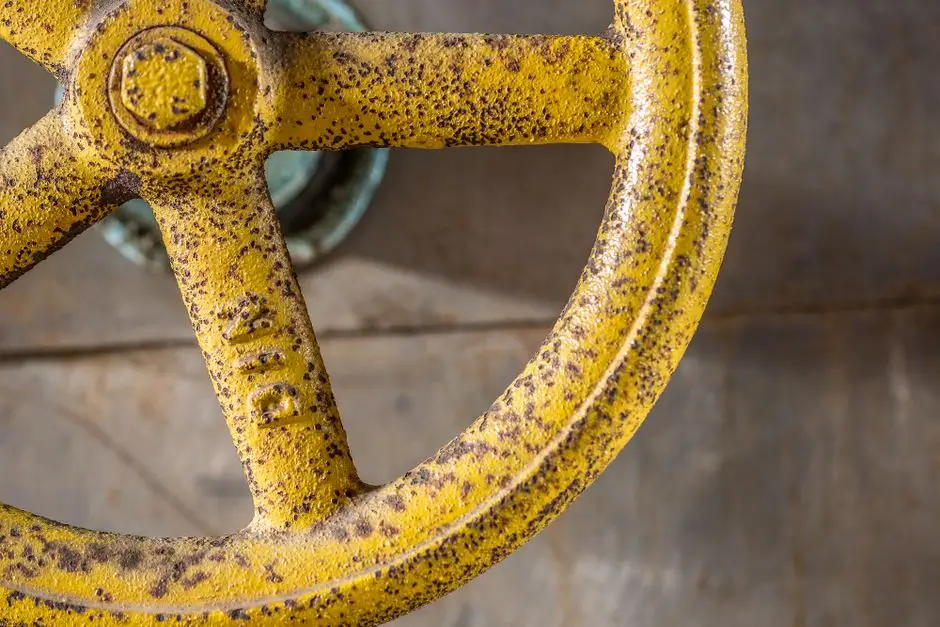
Shutting off your water main means closing the valve on the main supply line where it enters your house, which stops every faucet, toilet, and appliance line in the home at once. In Clinton, Utah, that valve is almost always either in the basement near the front foundation wall, in a ground-level utility closet, or in a curbside meter box near the sidewalk. Knowing which one is yours before a pipe lets go is the difference between a $400 repair and a $12,000 rebuild.
A half-inch burst supply line pushes out roughly 8 to 10 gallons per minute. That is a bathtub full of water every 20 minutes, running into your subfloor, your insulation, and your furnace closet. This guide walks through finding the valve, closing it under pressure, and what to do in the ten minutes after the water stops. We do this work every week across Clinton, and the homeowners who come out ahead are the ones who practiced the shut-off once, on a dry day, before they needed it.
Find your shut-off valve before you need it
Locating your main shut-off valve takes about five minutes and costs nothing, and it is the single highest-value thing you can do for your home this month. Clinton sits on a mix of 1970s slab-on-grade ranches, 1990s two-story subdivisions, and newer builds out toward the west side, and the valve location changes with the era of the house.
Start at the lowest level of the home. Follow the cold-water line backward from your water heater. On most Clinton homes built before 1990, that line runs to a brass gate valve within three feet of where the copper pipe punches through the foundation wall. On homes built after 2000, you are more likely to find a lever-style ball valve in a white plastic utility box in the basement ceiling or in a mechanical closet beside the furnace.
Three places to check, in order:
- Basement or crawl space on the wall facing the street, usually within 5 feet of the water heater.
- Utility closet or laundry room at ground level, often behind a removable panel.
- Curbside meter box in the park strip between the sidewalk and the street, under a concrete or composite lid.
If you cannot find it in ten minutes, call your water provider and ask them to mark the meter. They will do it at no charge, and it saves you from guessing at 2 a.m. with water running down the hallway. Homeowners we work with on water leak restoration Clinton UT tell us the same thing almost every time: they knew roughly where the valve was, but not exactly, and they lost fifteen minutes looking.
Where is the water main shut off valve in Clinton UT?
In Clinton UT, the water main shut off valve is either the private valve inside your home or the city-owned curb stop at the meter, and you need to know which one you are turning. The private valve is yours. The curb stop belongs to the water district, and turning it without calling first can get you a repair bill and a conversation you do not want.
Here is how to tell them apart. The private valve sits inside the building envelope, usually on a pipe that runs horizontally along a wall. The curb stop sits in a vertical pipe in a concrete box out near the street, with a round or oval lid you lift with a screwdriver. Clinton's frost depth runs about 30 inches, so the curb stop sits deep, and the meter box lid is often buried under an inch of sod by late fall.
Older neighborhoods show a clear pattern. Across Old Town Clinton Water Damage Restoration calls, we regularly find original 1960s galvanized gate valves that have not been turned in 40 years. Those valves seize. If yours is a round wheel on a brass body and it has not moved since the Reagan administration, do not force it during an emergency - go straight to the curb stop or call us.
Newer builds on the west side of town almost always have a lever ball valve. A quarter turn is all it takes, and the handle points across the pipe when closed. If your valve is a lever, you are in good shape. Test it once a year in the spring.
How do I shut off my water main in Clinton Utah?
To shut off your water main in Clinton Utah, turn the valve clockwise until it stops - a lever valve goes a quarter turn, a round wheel valve takes three to five full rotations. Water will keep running for 30 to 60 seconds as the lines drain, then taper off. That is normal.
Work through it in this order:
- Turn off the water heater. Flip the breaker or set the gas valve to pilot. A drained tank with the burner still running cracks the tank or burns out the element.
- Close the main valve. Clockwise, firm, no jerking. If it is a wheel valve, expect resistance and keep steady pressure.
- Open the lowest faucet in the house. A basement utility sink or a hose bib. This drains the lines and drops the pressure fast.
- Open a faucet on the top floor. This breaks the vacuum and lets the water actually leave the system.
- Check the meter. If the small triangle or dial on your meter is still spinning after five minutes, water is still moving somewhere.
If the valve will not budge, do not put a pipe wrench on it and lean. Gate valves snap at the stem, and then you have an open pipe and no way to close it. Call us instead. Our team handles emergency water removal Clinton UT around the clock, and we can shut the line at the curb and get the water out while you deal with the valve.
One more thing: if the leak is coming from a toilet supply line or a toilet that will not stop running, you can usually isolate it at the fixture valve behind the bowl and skip the main entirely. That is the fastest fix for a toilet overflow cleanup Clinton UT situation, and it buys you time to deal with the main on your own schedule.
What to do in the first 10 minutes after the water stops
Once the water stops, the clock on mold growth starts - mold can begin colonizing wet drywall and carpet backing in 24 to 48 hours. The first ten minutes decide how much of your flooring and drywall survives.
Do these in order:
- Kill the power to any room with standing water at the breaker panel. Do not walk through water to reach a switch.
- Photograph everything before you move a single item. Your insurance adjuster will want it, and so will we.
- Pull up wet rugs and move furniture off the wet area. Dye from a wet rug wicks into carpet pad permanently within a few hours.
- Shop-vac what you can and run fans. Household fans help, but they will not dry a subfloor.
- Do not run your HVAC if the water touched a furnace, air handler, or ductwork. You will push moisture through the whole house.
If the water came from a supply line, it is clean water and the dry-out is straightforward. If it backed up from a drain or a sewer line, treat it as contaminated and stay out of the room until it is cleaned. That is a different job, and it needs sewage cleanup Clinton UT with proper containment and disposal, not a shop-vac and a fan.
Typical 2026 pricing in this area runs $1,200 to $3,500 for a standard residential dry-out covering 300 to 800 square feet, including extraction, air movers, dehumidifiers, and moisture monitoring. If structural materials have to come out, expect $4,000 to $9,000. Most Clinton homeowner policies cover the dry-out; the valve repair itself is usually on you.
Common mistakes that make a leak worse
The most expensive water damage calls we run are not the ones with the biggest leak - they are the ones where the homeowner did the wrong thing in the first hour. Here is what we see most often.
Forcing a seized valve. A 40-year-old gate valve that has not been turned will snap its stem if you put a cheater bar on it. Then the line is open and nothing you own will close it. Stop, call the water district, and let them shut the curb stop.
Turning the water back on to "check." We get this one weekly. Someone shuts the main, mops up, turns it back on to see if the leak is fixed, and floods the room a second time. Leave it off until a plumber has repaired the line.
Running the furnace or AC. If water reached the air handler, running the system spreads moisture into every duct in the house. That turns a $2,000 dry-out into a $15,000 duct and insulation replacement.
Waiting until morning. Water wicks up drywall at roughly one inch per hour. Eight hours of sleep is eight inches of ruined drywall, and that is the difference between a patch and a full wall replacement.
Assuming the curb stop is yours to turn. It is not. In Clinton, the curb stop and meter belong to the water district. Turning it yourself can damage the meter coupling, and the repair bill lands on your account.
If you want to see how quickly a small supply-line leak turns into a full room, look at the work we do on water damage mitigation Clinton UT. Most of those jobs started as a drip under a sink that ran overnight.
When to call a professional
Call a professional when the leak is behind a wall, under a slab, or coming from a line you cannot isolate - and call immediately if the water has been running for more than 20 minutes. At that point you are not managing a leak, you are managing a dry-out, and those are two different skill sets.
We are Swiftcrest Corps, and we handle water damage restoration across Clinton and the surrounding north Davis County area. We find the source, extract the standing water, set drying equipment, and monitor moisture readings until the structure is back to its dry standard. We bill most jobs directly to your insurance carrier and give you the price before we start.
Call us if any of these are true:
- Water has reached carpet, pad, or drywall.
- The leak is from a slab, a wall cavity, or a second-floor bathroom.
- You smell musty air or see discoloration on ceilings or baseboards.
- The shut-off valve will not close and the water is still running.
- The water came from a drain, toilet, or sewer line.
If you are in one of the older neighborhoods and want a sense of what we handle there, our Clinton Heights Water Damage Restoration page covers the specific issues we see in those homes - original plumbing, finished basements, and tight crawl spaces.
Frequently Asked Questions
Where is my water main shut off valve in Clinton UT?
In most Clinton homes it is in the basement on the wall facing the street, within about 5 feet of the water heater, or in a ground-level utility closet. Homes built after 2000 often have a lever valve in a mechanical closet. The city curb stop sits in a meter box in the park strip near the sidewalk.
How do I shut off my water main in Clinton Utah?
Turn the valve clockwise until it stops - a quarter turn for a lever valve, three to five full turns for a round wheel valve. Then shut off the water heater, open the lowest faucet in the house to drain the lines, and check the meter to confirm flow has stopped. The whole process takes under two minutes.
What should I do before a water leak spreads in Clinton?
Shut the main, kill power to any wet room at the breaker, and photograph everything before you move it. Water wicks up drywall about one inch per hour, so start extraction and drying within the first hour. Call a restoration company if water reached carpet, pad, or drywall.
Who do I call for a water leak in Clinton UT?
Call a licensed restoration company for anything beyond a slow drip - Swiftcrest Corps at (855) 927-6272 handles emergency water removal and dry-out across Clinton. Call the water district if the leak is on the city side of the meter, and call a plumber if the supply line itself needs repair.
How much does water main shut off before a leak spreads in Clinton UT cost?
Shutting the valve yourself costs nothing. A plumber replacing a seized main valve runs $250 to $600 in 2026. A professional dry-out after a leak typically runs $1,200 to $3,500 for 300 to 800 square feet, and most homeowner policies cover that portion.
Get help with Water Damage Restoration in Clinton
If the water is still running or the floor is already wet, we can be there fast. Swiftcrest Corps handles Water Damage Restoration across Clinton - extraction, drying, and repairs, with the price confirmed before we start.
Call (855) 927-6272 and we will walk you through the shut-off over the phone while a crew heads your way.